Table of contents
The fastest Elementor users barely build from scratch — they save sections they like and reuse them everywhere. Elementor's template system covers single sections, full pages, and entire site kits. Shot on Elementor 4.x, WordPress 7.0, August 2026.
- Save any page or section as a template; insert it anywhere from the library.
- Templates → Saved Templates in wp-admin manages, exports, and imports them.
- Export/import as
.jsonmoves designs between sites. - Kits import a whole styled site — use them for starting points, not identity.
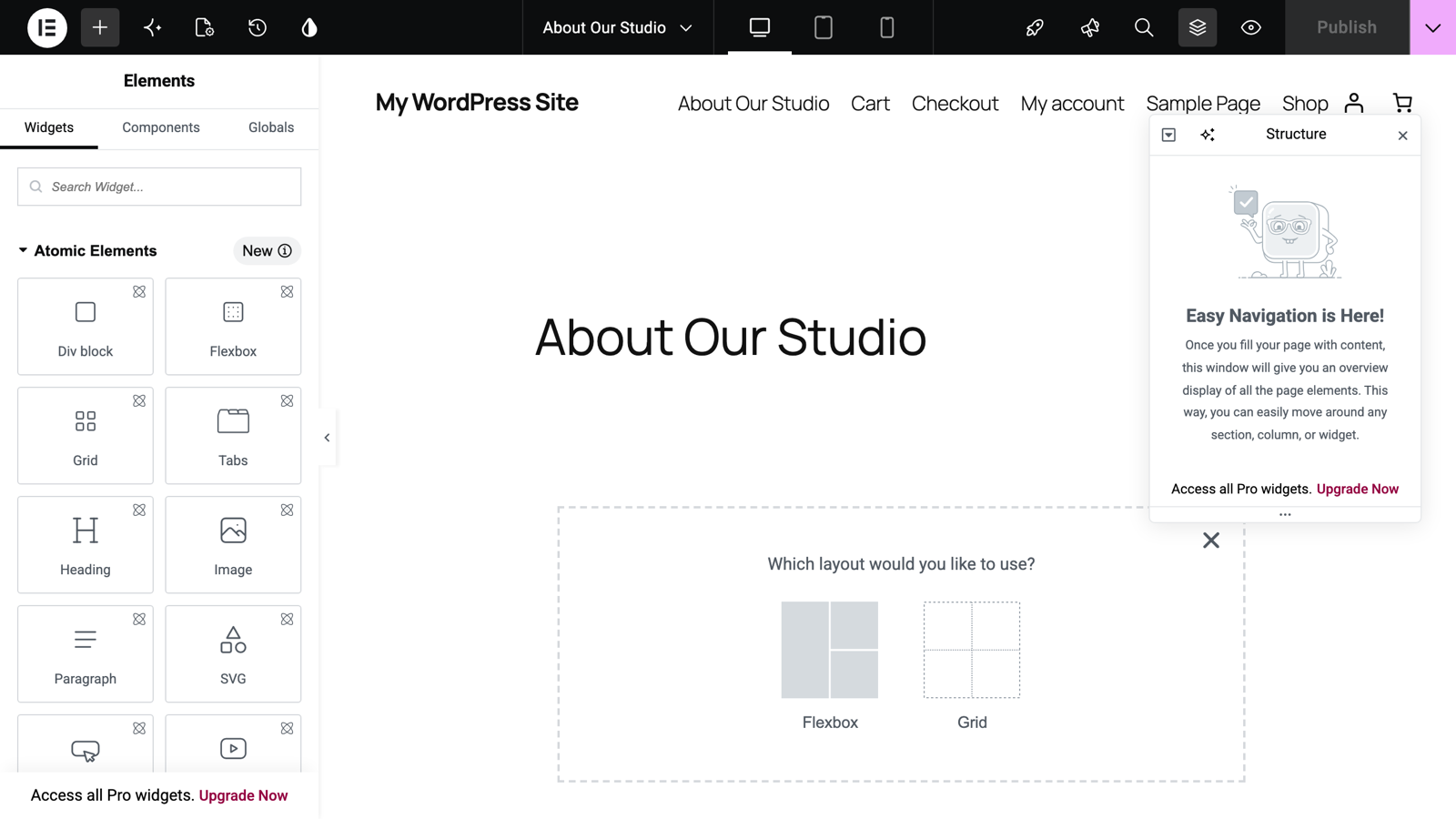
In the editor, right-click a container's handle and choose Save as template, or use the arrow beside the Publish button to save the whole page as a template. Name it descriptively — "CTA band, dark," not "Template 7."
Click the folder icon in the canvas to open the template library. The My Templates tab holds your saved work; insert with one click. Elementor also offers its hosted template gallery there (an Elementor account connects it).
Templates → Saved Templates lists everything. Hover a template for
Export template (downloads a .json file); the Import Templates
button accepts those files on any other Elementor site — this is how you move
a design between projects.
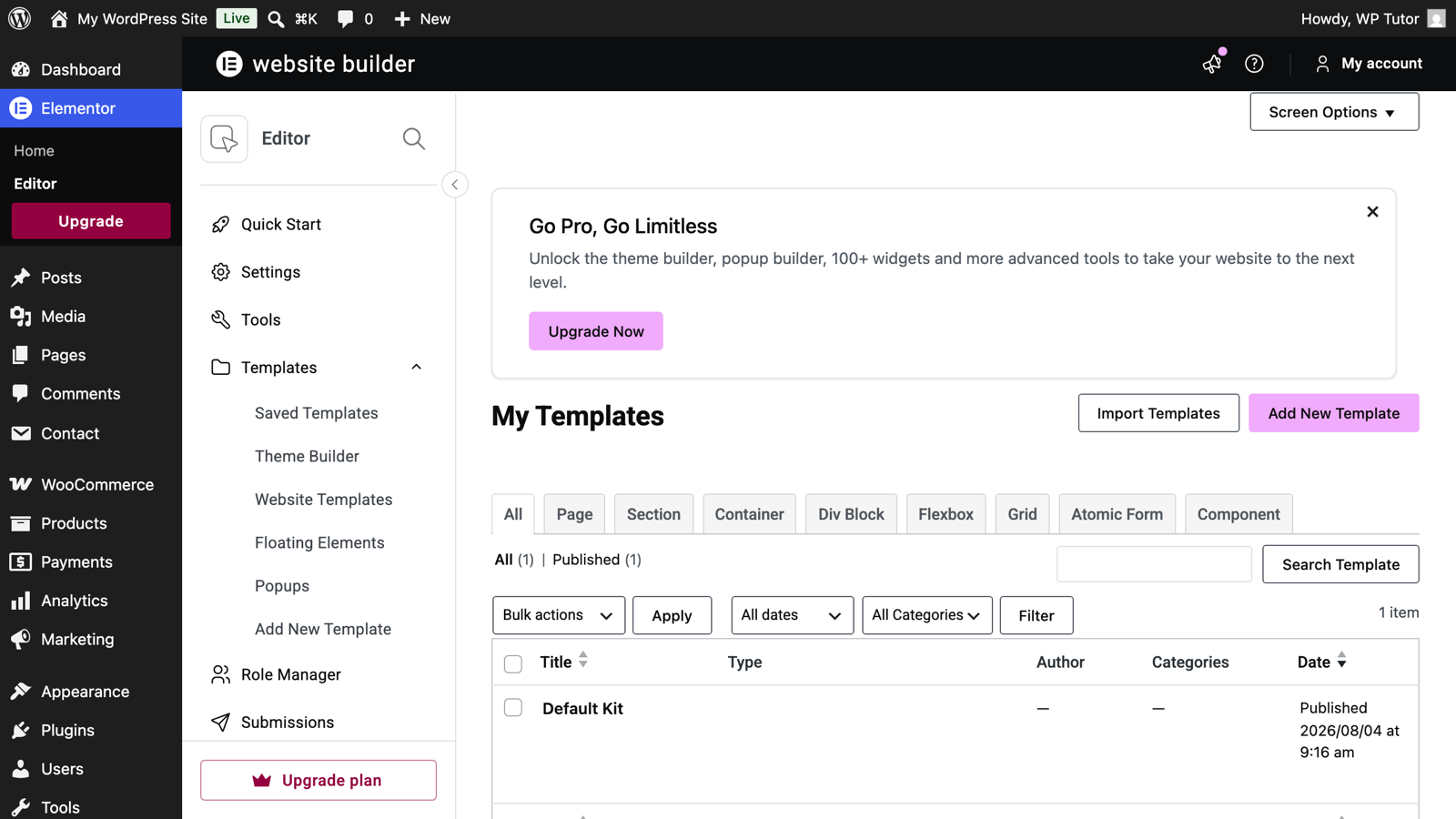
Full site kits (imported via Elementor's kit library) bring pages, headers, footers, and global styles at once. They're a legitimate speed boost for a new site — but import on a fresh or staging site, not over a live design, and expect to spend your time swapping content and colors so it stops looking like the demo.
Importing a kit can replace site-wide colors and fonts. On an existing site, that's a redesign, not an addition — do it on a sandbox copy first.
Keep learning
- Elementor help and training
- Top 10 Elementor themes
- How to use WordPress block patterns — the block editor's template idea
Leave a comment