Table of contents
Rank Math's import makes leaving Yoast almost anticlimactic — it detects Yoast's data and carries your titles, descriptions, and keyphrases across. The skill is in the order of operations and the after-checks. Shot on Rank Math importing from Yoast under WordPress 7.0, August 2026.
Still deciding whether to switch at all? Watch our comparison first:
- Back up first; this touches every post's SEO metadata.
- Install Rank Math while Yoast's data is still in the database — the wizard offers the import.
- Import, spot-check 5–10 key pages, then deactivate Yoast the same day.
- Resubmit the new sitemap in Search Console.
Take a full backup (your regular backup plugin or a host snapshot). Then install and activate Rank Math while Yoast is still installed — Rank Math needs Yoast's data present to import it. Ignore the plugins-page conflict warning for the next ten minutes.
In Rank Math's setup wizard, the Import step appears automatically when Yoast data is detected:
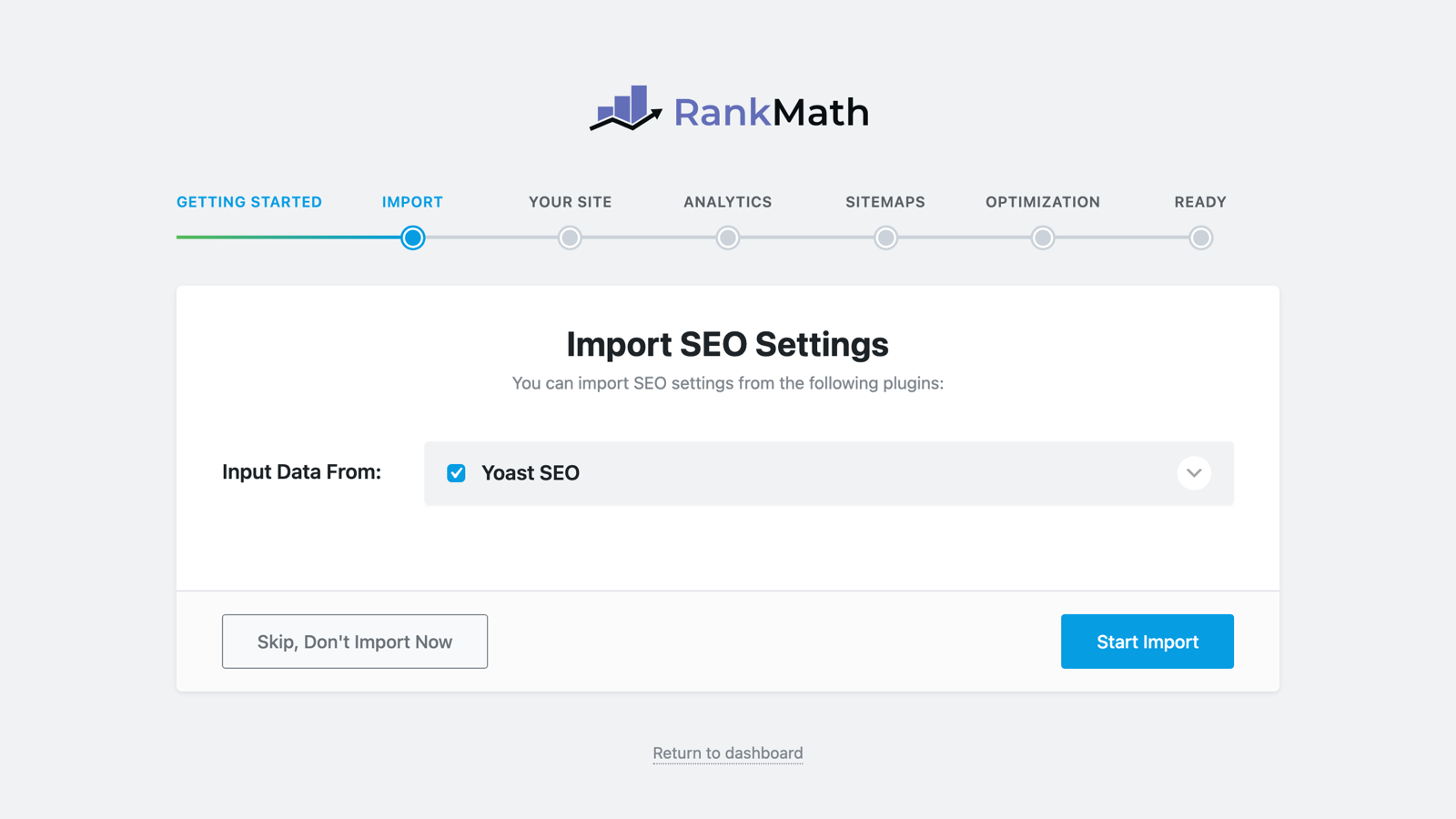
Expand the Yoast entry to see exactly what will transfer, click Start Import, and let it finish. On a large site this can take a few minutes — don't close the tab.
Open your five most important pages and confirm in the Rank Math sidebar that the SEO title, meta description, and keyphrase came across. View one page's source and check the title tag renders the imported value. Then deactivate (and later delete) Yoast — same day, so the two never fight over output.
Rank Math serves its sitemap at /sitemap_index.xml (same path Yoast used —
convenient). In Search Console, confirm the sitemap reads successfully.
Enable the modules you need on the dashboard and you're fully moved:
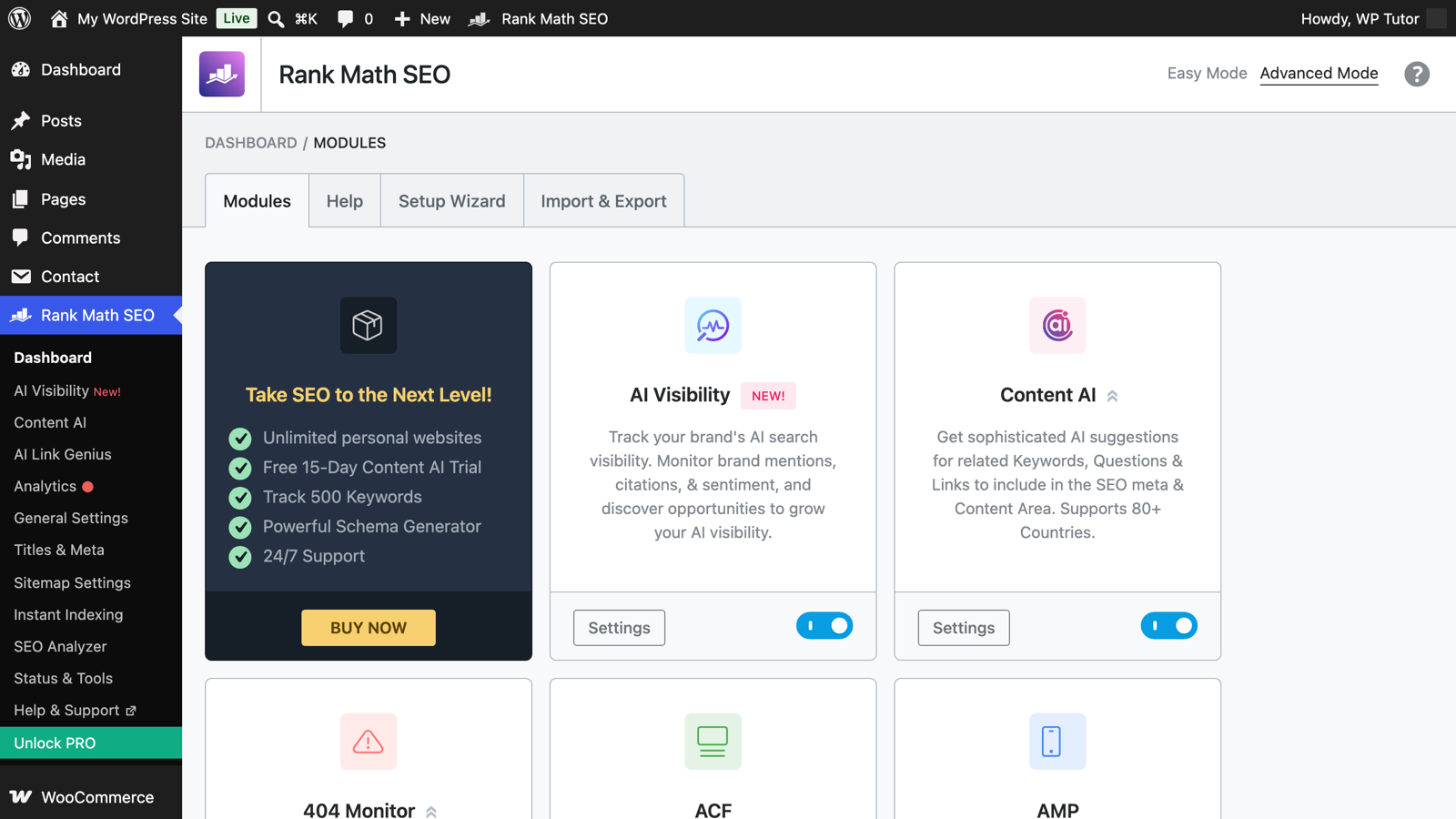
The importer covers Yoast's core data. Redirects from Yoast Premium should be exported (CSV) before you deactivate, then imported into Rank Math's Redirections module — losing redirects is the one genuinely painful migration mistake.

Leave a comment